The short version
- Cook components, not finished bowls: a grain, a protein, a roasted vegetable and a sauce.
- Cool food quickly and refrigerate it within two hours. Eat cooked leftovers within three to four days.
- Pack wet and dry parts separately: sauce, pickles and raw greens go on the side.
- Reheat until steaming hot all the way through, then add the fresh parts.
Meal prep works when the Thursday bowl still tastes like something you wanted. That mostly comes down to three things: choosing food that holds up, storing it safely, and keeping the fresh parts fresh. This is the routine we use for a four-day week.
Plan: pick components that keep
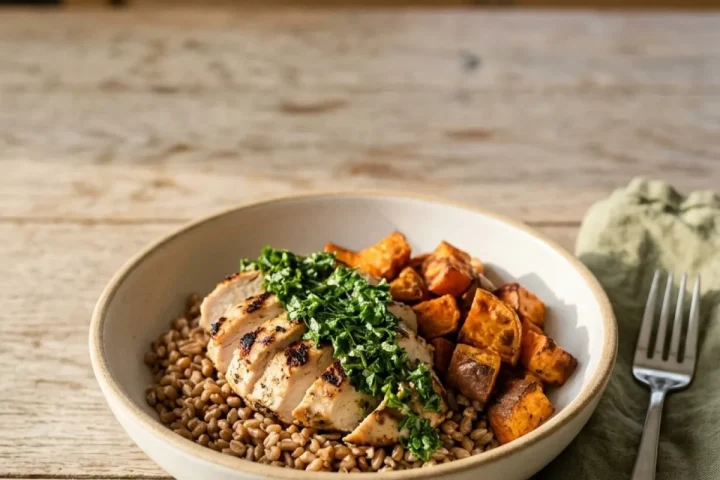
For four lunches or dinners, cook:
- One grain, about 4 cooked cups. Rice, quinoa and farro all keep well.
- One or two proteins, about 600 g cooked in total. Chicken thighs, ground turkey, salmon and tofu all reheat well; chicken breast does too if you follow a few rules.
- One roasted vegetable: broccoli, sweet potato, peppers, carrots or Brussels sprouts.
- One or two sauces, made fresh and stored in small jars.
- One fresh element, prepped but packed separately: cucumber, shredded cabbage, pickled onion, herbs.
Two proteins and two sauces give you four different-tasting bowls from the same few hours.
Cook: the two-hour Sunday
- Start the grain first; it can cook on its own.
- Roast vegetables and proteins on separate sheet pans at the same time.
- Make the sauces while everything is in the oven.
- Prep the fresh vegetables last.
Cool and store safely
Spread hot food out in shallow containers so it cools quickly, then refrigerate it within two hours of cooking. Rice deserves extra care: cool it quickly and get it into the fridge as soon as you reasonably can, ideally within an hour.
The USDA guideline for cooked leftovers is to eat them within three to four days. If you prep on Sunday, plan to eat the Friday bowl from the freezer, or cook a second, smaller batch on Wednesday.
| Component | Fridge | Freezer |
|---|---|---|
| Cooked chicken, beef, pork, turkey | 3–4 days | 2–3 months for best quality |
| Cooked fish and shrimp | 3–4 days | Up to 3 months |
| Cooked grains | 3–4 days | Up to 2 months |
| Roasted vegetables | 3–4 days | Not ideal; texture suffers |
| Yogurt or tahini sauces | 4–5 days | Not recommended |
Pack: keep wet and fresh apart
Use containers with a small separate cup, or pack sauce in its own jar. Raw greens, cucumber and herbs go in a second small container or are added the day you eat. Pickled onions are the exception: they are better on day three than day one.
Reheat: hot first, fresh last
Reheat the grain, protein and roasted vegetables together with a splash of water, covered, until steaming hot throughout (165°F / 74°C). Stir halfway so there are no cold spots. Reheat rice only once. Then add the sauce, the crunchy toppings and the fresh vegetables.
Bowls built for prepping
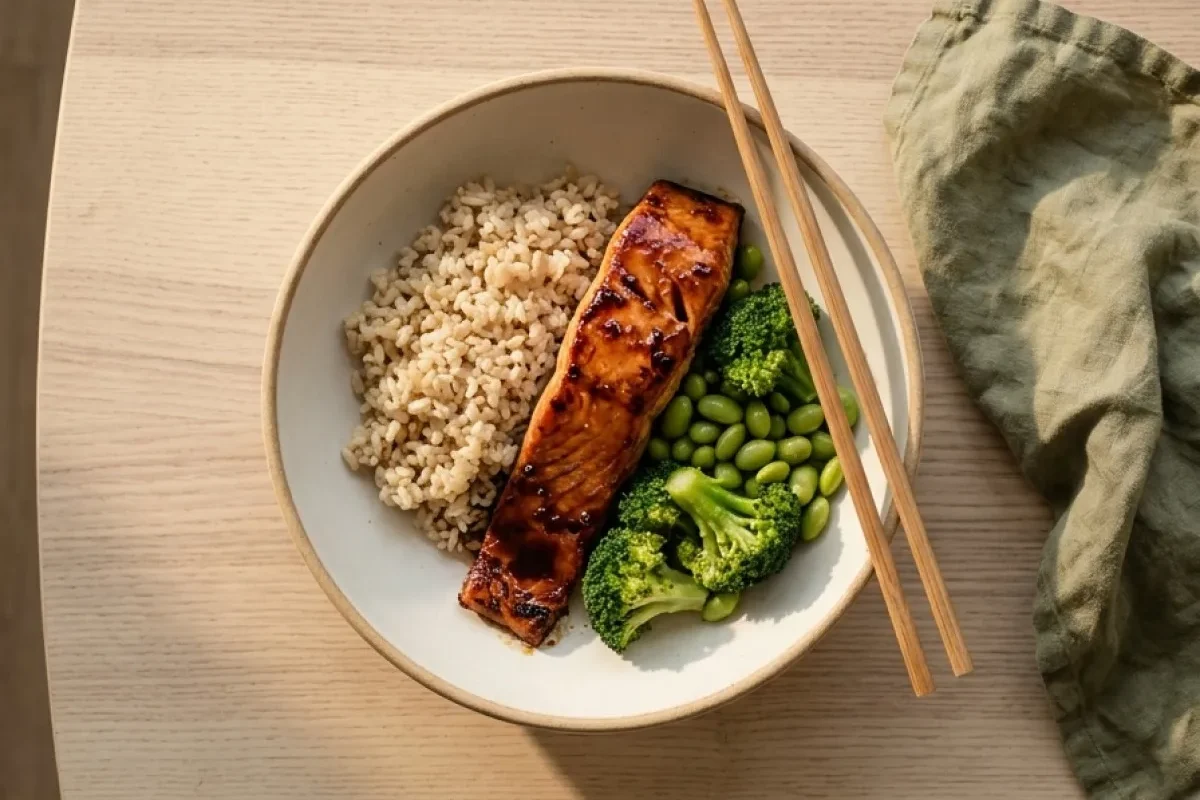
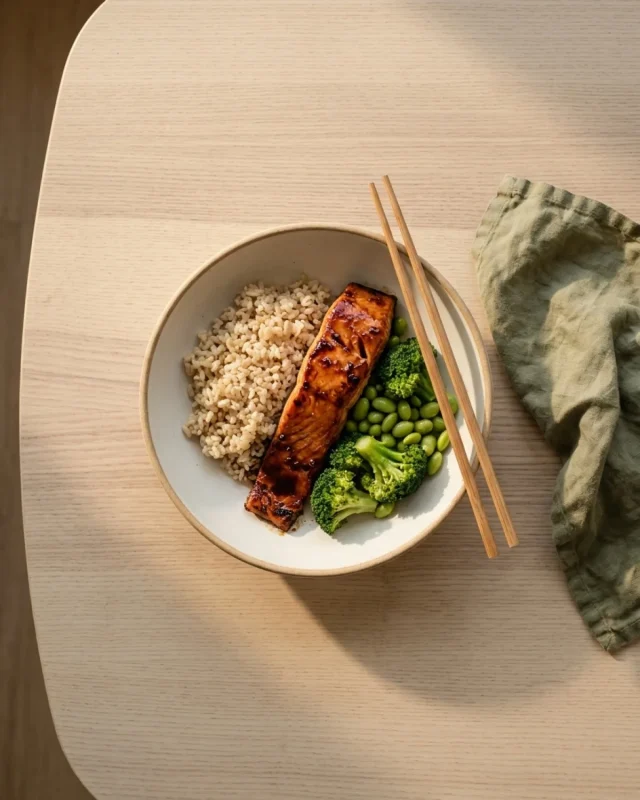
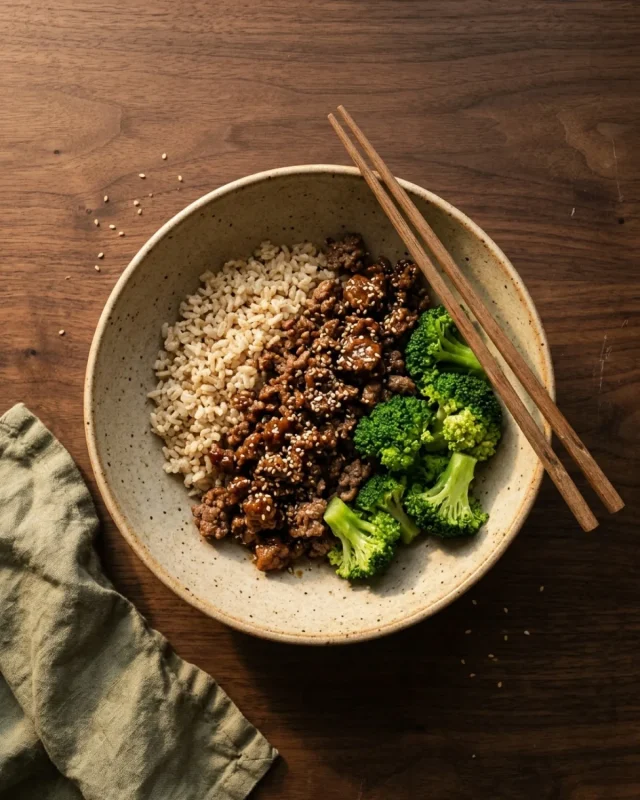
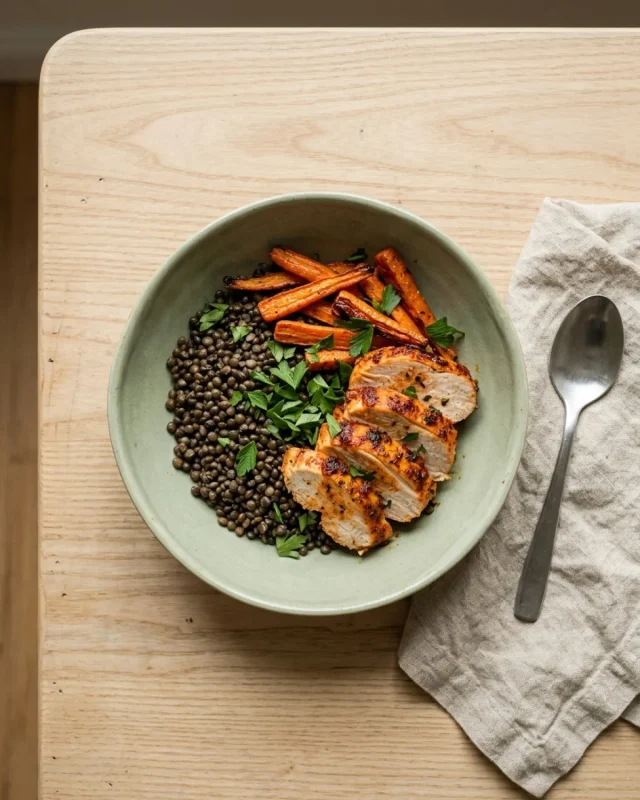
Our meal prep bowls are written with this routine in mind. Good starting points: teriyaki salmon and edamame, Korean sesame beef and broccoli and harissa turkey and lentils.
Storage times follow USDA Food Safety and Inspection Service guidance for cooked leftovers. Freezer times are for quality; frozen food stays safe longer.
Comments