The short version
- One main protein of about 150 g (5 oz) cooked usually gets you 35–45 g.
- Close the gap with a protein-rich base or topping: lentils, beans, edamame, eggs, Greek yogurt or cheese.
- Vegetarian bowls work best when they combine two sources, such as tofu and edamame.
- Numbers below are approximate; labels and portion sizes vary.
Plenty of people aim for a substantial amount of protein at lunch and dinner, whether for training, staying full or simply eating more balanced meals. Protein powder is one way to get there. Ordinary groceries are another, and they come with texture, flavor and a meal you actually want to sit down to.
This guide is about the practical side: how much of which food gets you to roughly 40 g in one bowl. How much protein you need depends on your body and goals; a doctor or registered dietitian is the right person to ask about that.
Start with one main protein
A 150 g (5 oz) cooked portion of most meats and fish provides the bulk of a 40 g bowl. Approximate values for that portion:
| 150 g cooked | Protein (approx.) |
|---|---|
| Chicken breast | 46 g |
| Lean ground beef (93%) | 39 g |
| Chicken thigh, skinless | 37 g |
| Shrimp | 36 g |
| Salmon | 33–37 g |
| Tempeh | 29 g |
| Extra-firm tofu | 23–25 g |
Then add a second source
Instead of a bigger piece of meat, add a smaller second source. It spreads the protein across the bowl and adds texture:
- Edamame, shelled: about 18 g per cooked cup.
- Lentils: about 18 g per cooked cup.
- Chickpeas or black beans: about 15 g per cooked cup.
- Eggs: about 6 g per large egg.
- Plain Greek yogurt: about 10 g per 100 g. It makes an excellent sauce base.
- Cottage cheese: about 11 g per 100 g.
- Feta or parmesan: 4–10 g per 30 g serving, depending on the cheese.
Choose a base that pulls its weight
Grains are not protein-heavy, but the differences add up over a week. Per cooked cup, approximately: white rice 4 g, brown rice 5 g, quinoa 8 g, lentils 18 g. Mixing half rice and half lentils is an easy way to raise a bowl without changing its character. Compare bases in our grain guide.
Three bowls that get there
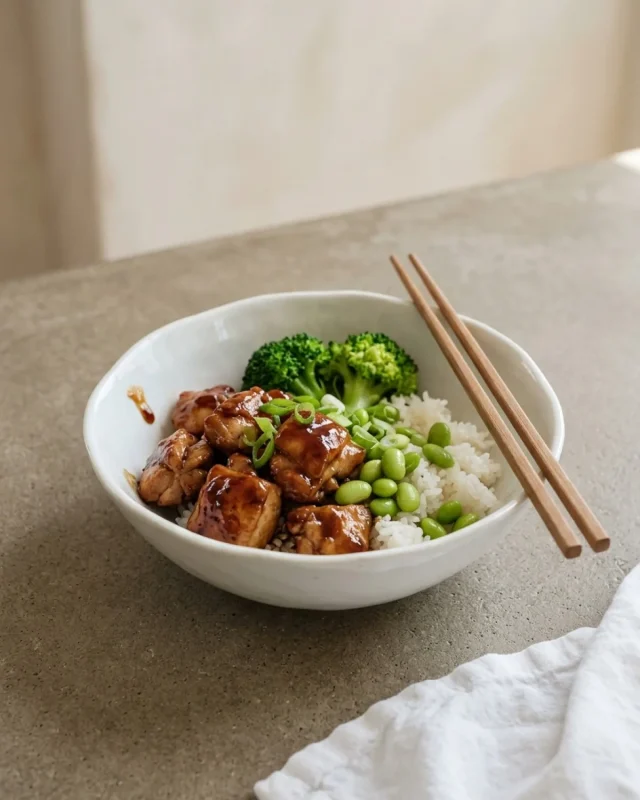
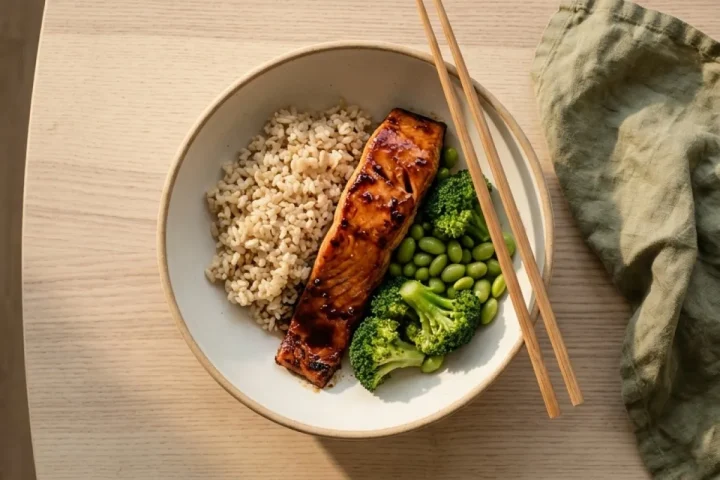
- Chicken and edamame: 150 g chicken breast (46 g) with ½ cup edamame (9 g) over rice (4 g). Roughly 59 g. Try the teriyaki chicken edamame bowl.
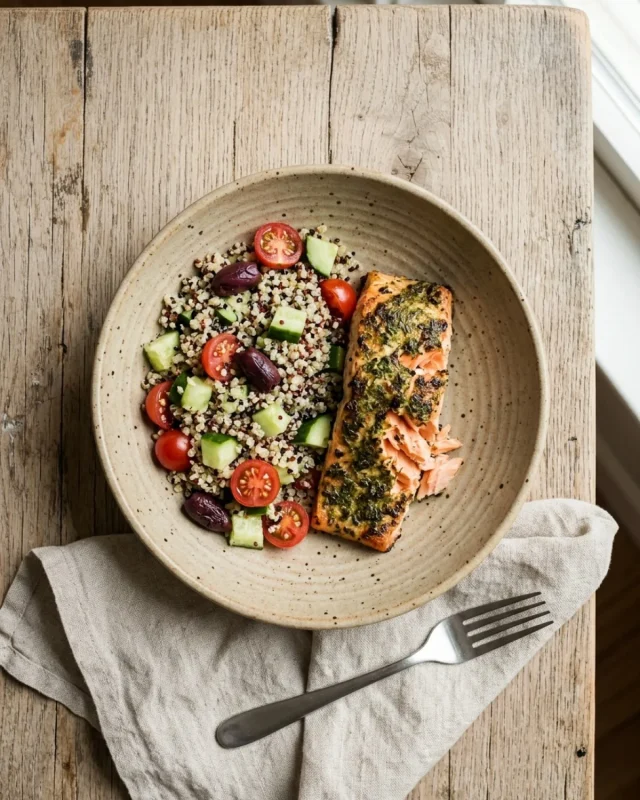
- Salmon and quinoa: 150 g salmon (35 g) over 1 cup quinoa (8 g) with a Greek yogurt sauce (3 g). Roughly 46 g. See the Mediterranean salmon quinoa bowl.
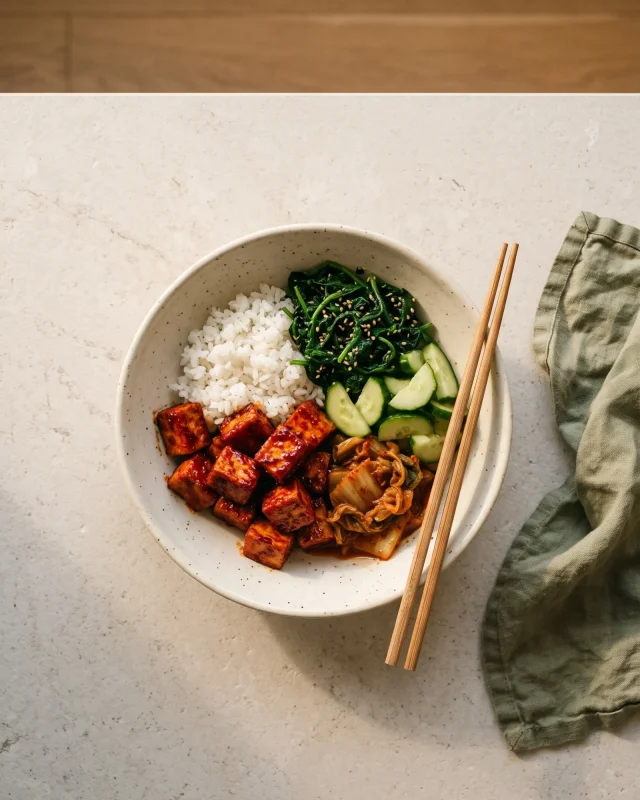
- Vegetarian: 150 g extra-firm tofu (24 g) with 1 cup edamame (18 g) over rice (4 g). Roughly 46 g. Try the gochujang crispy tofu bowl.
A note on breakfast
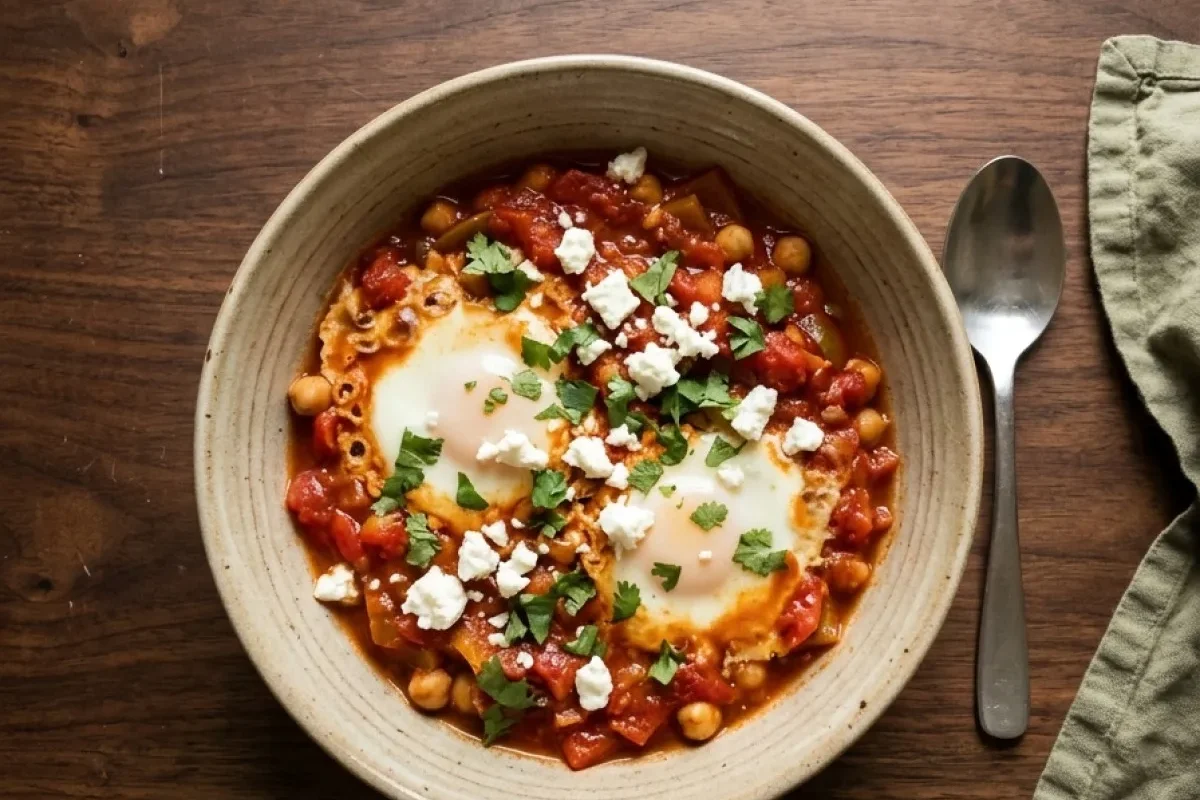
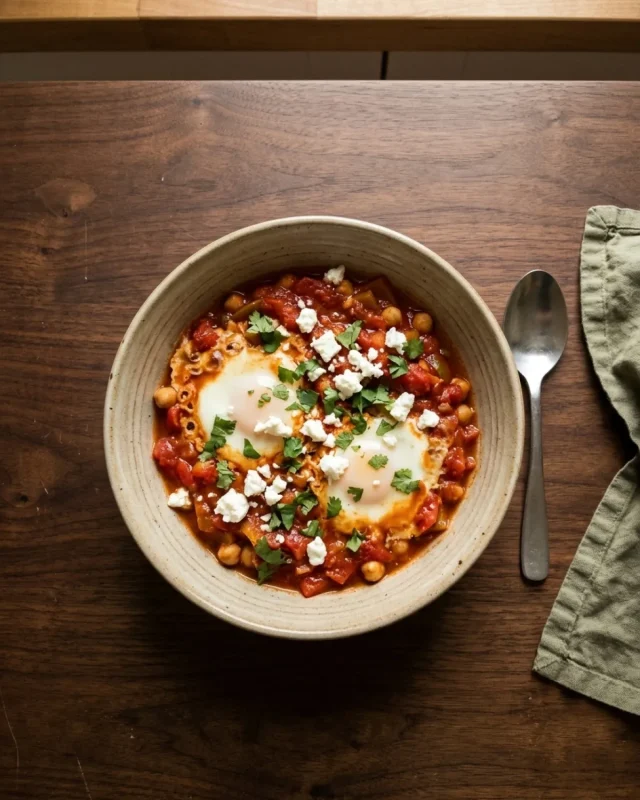
Breakfast is where protein usually falls short. Eggs plus a dairy element closes the gap quickly: three eggs (about 18 g) with 150 g cottage cheese (about 17 g) is already 35 g. The shakshuka egg and feta bowl is a good place to start.
Figures are approximate, based on USDA FoodData Central values for cooked foods, and rounded. Recipe protein numbers on Bowlyra are estimates for the same reason. This guide is general cooking information, not medical or dietary advice.
Comments