The short version
- Cook to 165°F (74°C) with a thermometer instead of guessing. Most dry chicken is simply overcooked.
- Even the thickness first, and salt 30 minutes ahead.
- Let it rest before slicing, and store it in larger pieces.
- Reheat gently with a splash of water or broth, and keep sauce on the side.
Chicken breast is the most common meal-prep protein because it is lean, affordable and easy to portion. It is also the one most people complain about by Wednesday. The reason is simple: with very little fat, it has almost no margin for error. A few minutes too long in the pan, followed by a microwave reheat, and it turns chalky.
None of the fixes below are complicated. Together, they make a noticeable difference by day four.
1. Make it one even thickness
A whole breast is thick at one end and thin at the other, so the thin end overcooks while the thick end catches up. Either slice it horizontally into two thinner cutlets, or place it between two sheets of parchment and pound it to an even 2 cm (¾ inch). It cooks faster and more evenly.
2. Salt it ahead of time
Season the chicken with salt at least 30 minutes before cooking, or up to a day ahead in the fridge. Salt has time to work into the meat, which seasons it all the way through and helps it hold on to moisture as it cooks. About ¾ teaspoon of kosher salt per 450 g (1 lb) is a good starting point.
3. Cook to temperature, not to time
This is the most important step. The USDA safe minimum internal temperature for chicken is 165°F (74°C). Cooking times in any recipe are estimates; thickness, pan and oven all change the result. An instant-read thermometer in the thickest part tells you exactly when to stop.
Hot and fairly fast works best for breasts: a well-heated skillet, or a 425°F (220°C) oven on a sheet pan for batch cooking.
4. Rest before slicing
Give cooked chicken 5 to 10 minutes on a board before you cut it. Slicing immediately lets more juice run out onto the board instead of staying in the meat.
5. Store it in bigger pieces
Sliced chicken has more cut surface, so it dries faster in the fridge. If you can, store breasts whole or in thick pieces and slice them the day you eat them. Cool the chicken quickly, refrigerate it within two hours of cooking, and eat it within three to four days, which is the USDA guideline for cooked leftovers.
6. Reheat gently
Add a tablespoon of water or broth to the container, cover it loosely and reheat at medium power, stirring or turning once, until it is steaming hot (165°F / 74°C in the center). Keep sauces and dressings in a separate container and add them after reheating.
When to use thighs instead
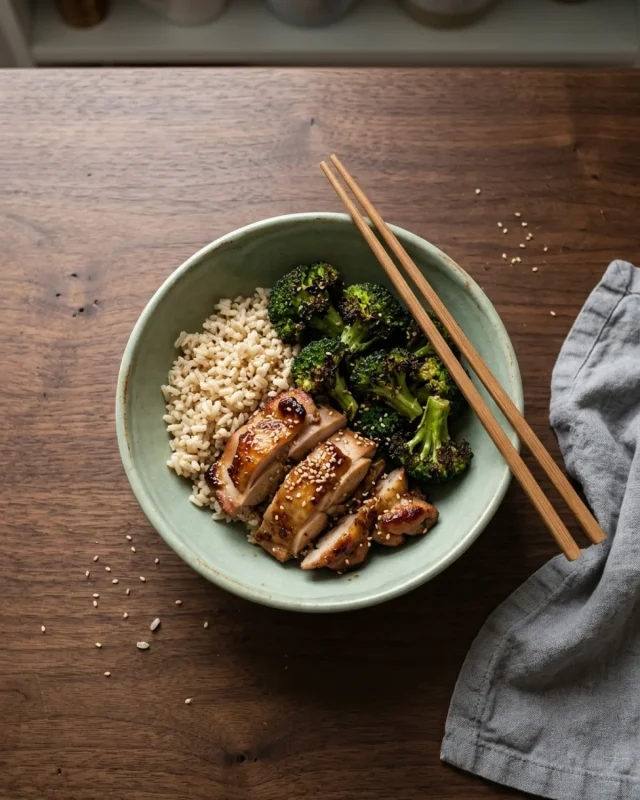
If you prep for more than three days, consider boneless, skinless thighs. They have a little more fat, so they stay tender after reheating and are much more forgiving. Many of our meal-prep recipes, like the miso-glazed chicken bowl, use thighs for that reason.
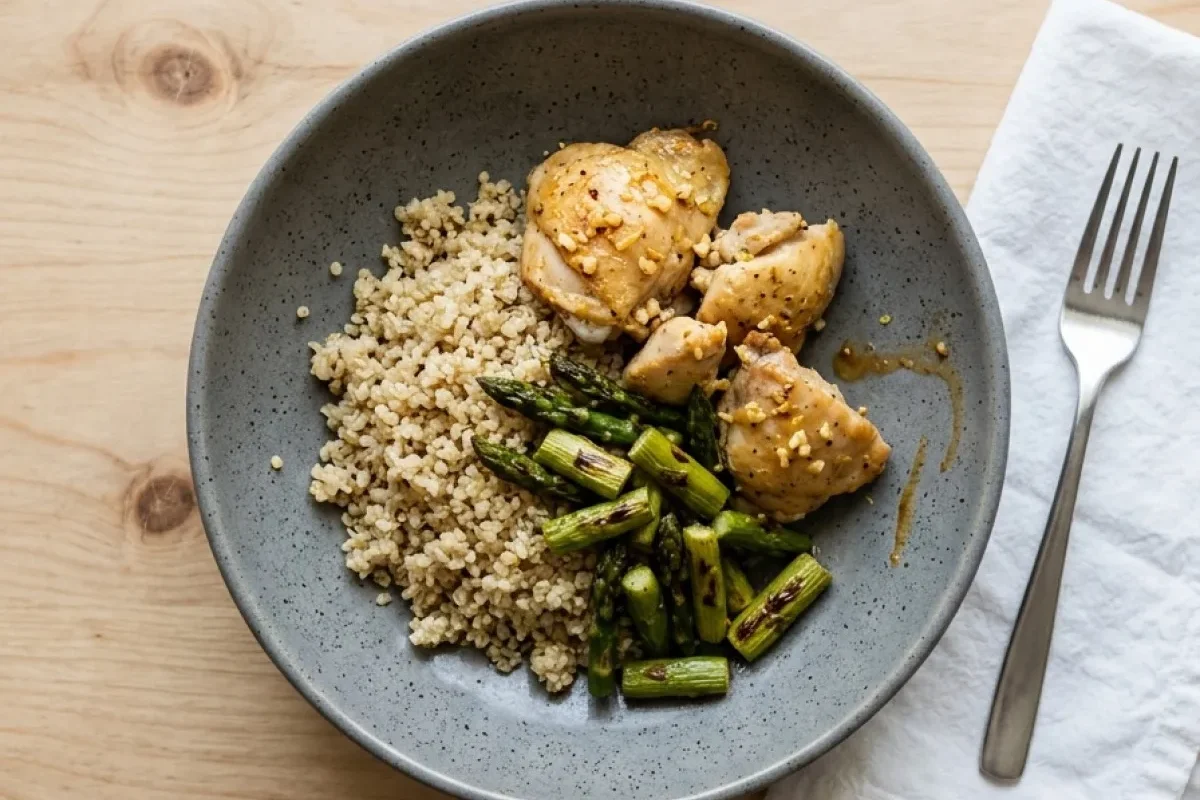
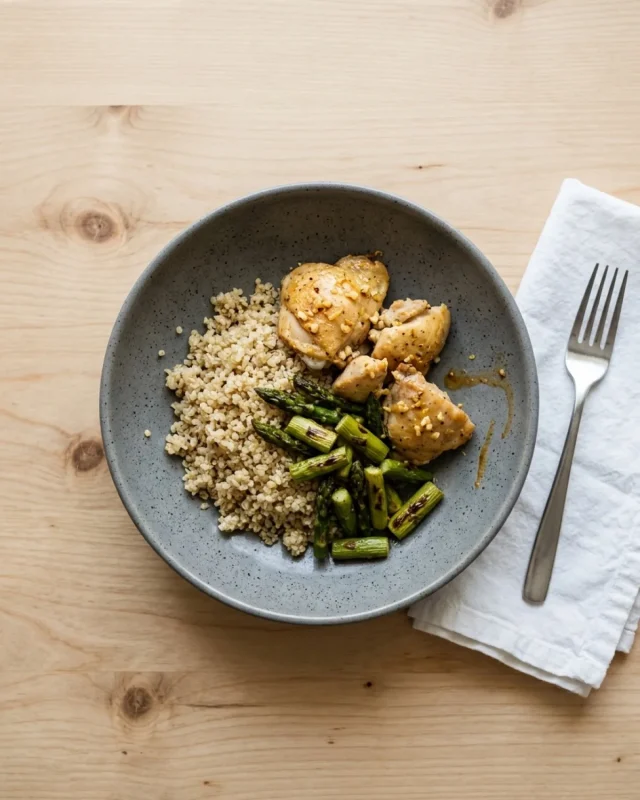
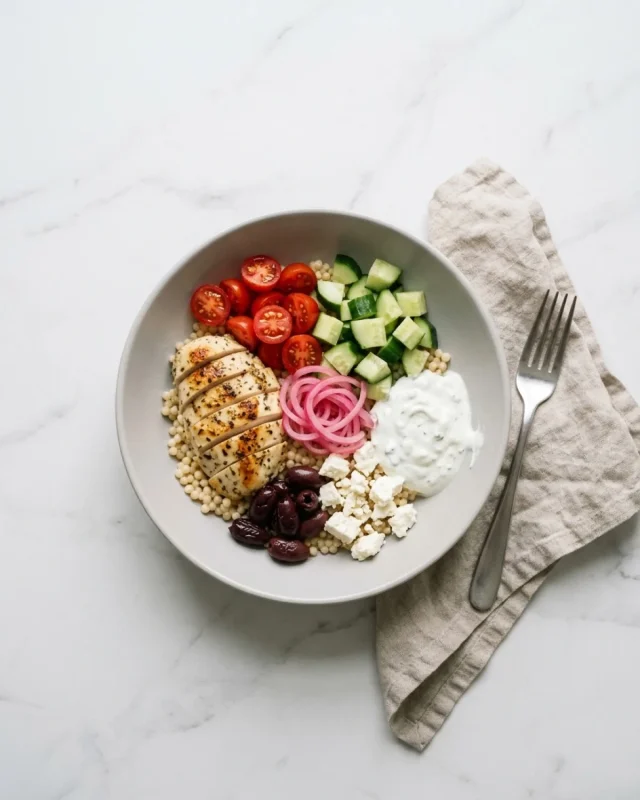
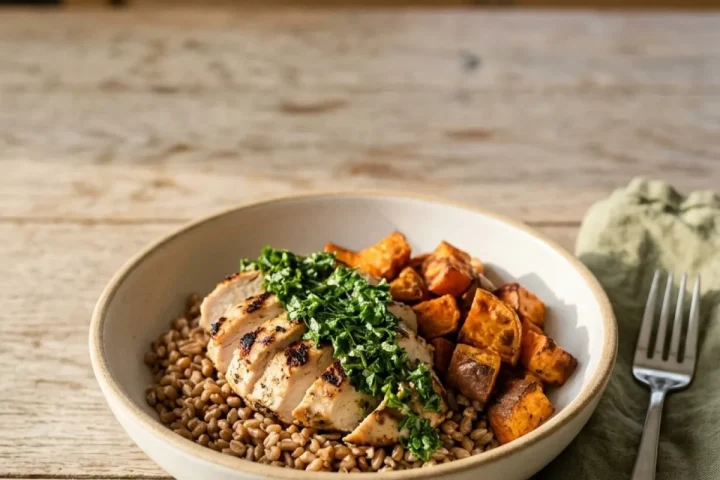
For breast-based prep, try the lemon garlic chicken and asparagus bowl or the Greek chicken meal prep bowl.
Food-safety temperatures and storage times follow USDA Food Safety and Inspection Service guidance.
Comments