The short version
- Build every bowl from four parts: a base, a protein, a fresh or crunchy element, and a sauce.
- Start with about 150 g (5 oz) of cooked protein per person. That usually lands a bowl in the 35–50 g protein range.
- Use two textures of vegetables: one cooked, one raw or pickled.
- Keep the sauce separate until you eat, especially if you are prepping ahead.
Most bowls that disappoint fail in the same way: one part is doing all the work. The chicken is fine but the rice is bland, or there is a great sauce and nothing for it to cling to. The fix is not a fancier recipe. It is a simple structure you can repeat with whatever is in the fridge.
We build every recipe on this site from the same four parts. Once you know them, you can design a weeknight bowl in your head on the drive home.
1. The base: something to carry the sauce
The base is the quiet part of the bowl, and it should be. Its job is to soak up sauce and make the meal filling. Good options:
- Rice (jasmine, basmati, brown, short-grain). The default for a reason. Jasmine and short-grain hold sauce best.
- Quinoa. Light, quick, and slightly higher in protein than rice.
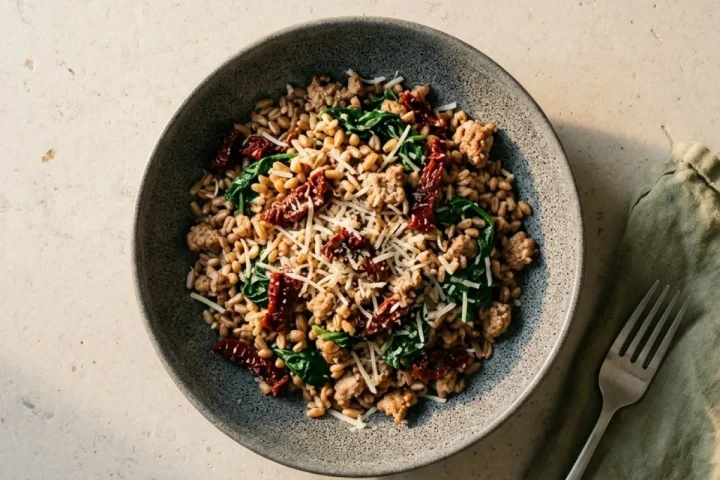
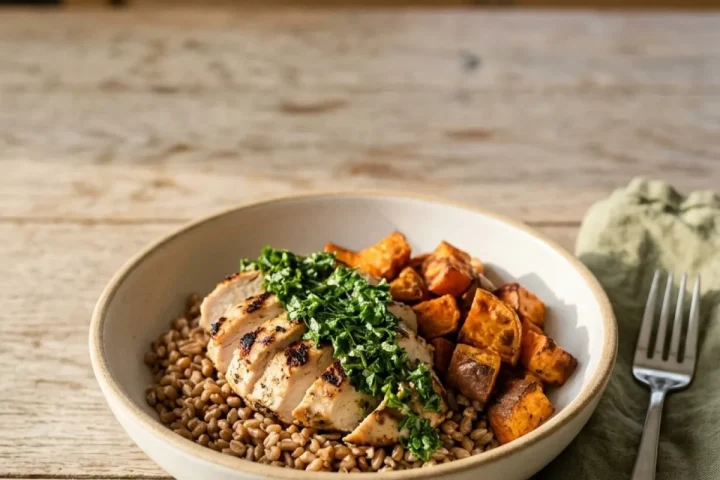
- Farro or freekeh. Chewy and nutty; excellent with roasted vegetables and vinaigrettes.
- Lentils or beans. A base that also adds protein.
- Roasted potatoes or sweet potatoes, or greens if you want something lighter.
A cooked cup (roughly 150–190 g) per person is a generous serving for dinner. For meal prep, slightly undercook grains so they don’t turn soft when reheated. Our guide to choosing a base compares them side by side.
2. The protein: the anchor
This is the part that makes a bowl a meal. As a starting point, plan on about 150 g (5 oz) of cooked meat or fish per person, which is roughly 200 g (7 oz) raw. Approximate protein per 100 g, cooked:
| Protein | Protein per 100 g (approx.) |
|---|---|
| Chicken breast | 31 g |
| Chicken thigh, skinless | 25 g |
| Lean ground beef (93%) | 26 g |
| Shrimp | 24 g |
| Salmon | 22–25 g |
| Tempeh | 19 g |
| Extra-firm tofu | 15–17 g |
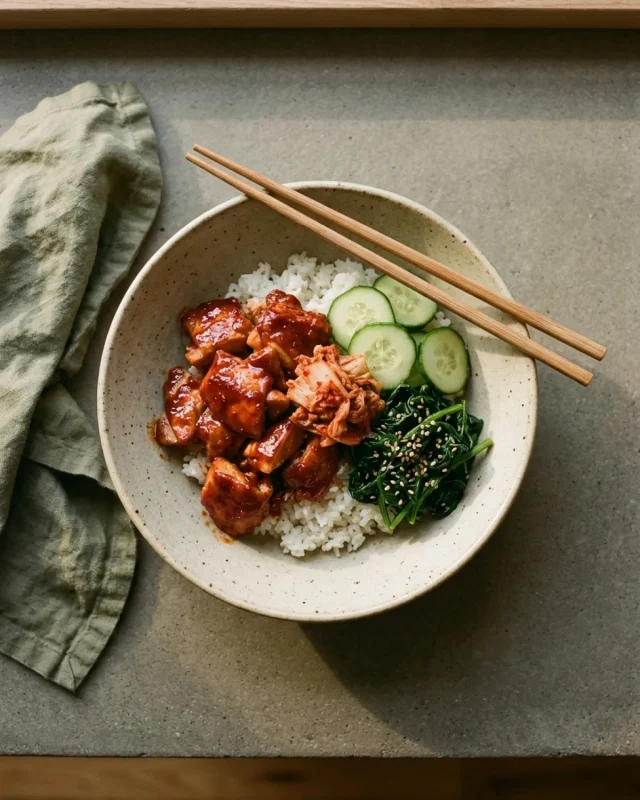
Season the protein properly. Most of the flavor in a bowl comes from two places: a hard sear on the protein and the sauce. A gochujang-glazed chicken bowl is a good example of both doing their job.
3. The fresh part: texture and contrast
This is what separates a bowl from a plate of leftovers. Aim for two vegetable textures:
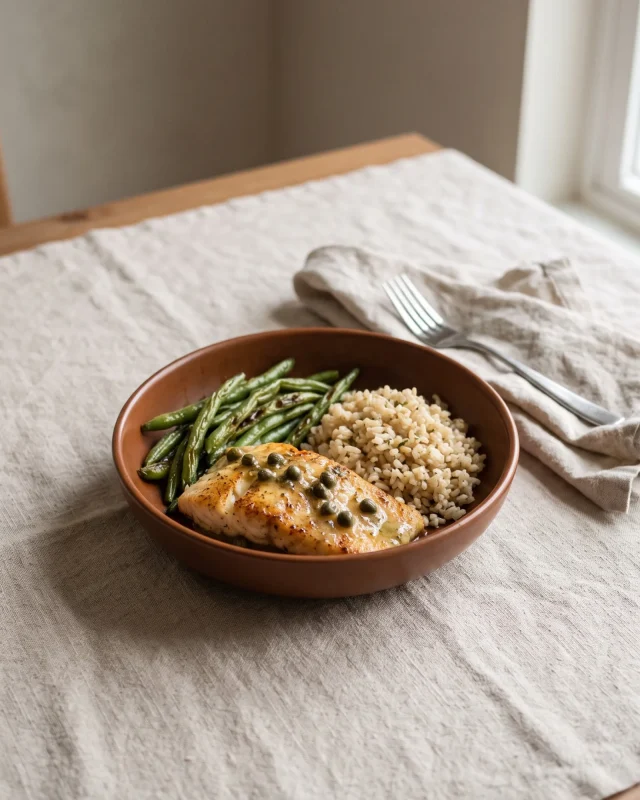
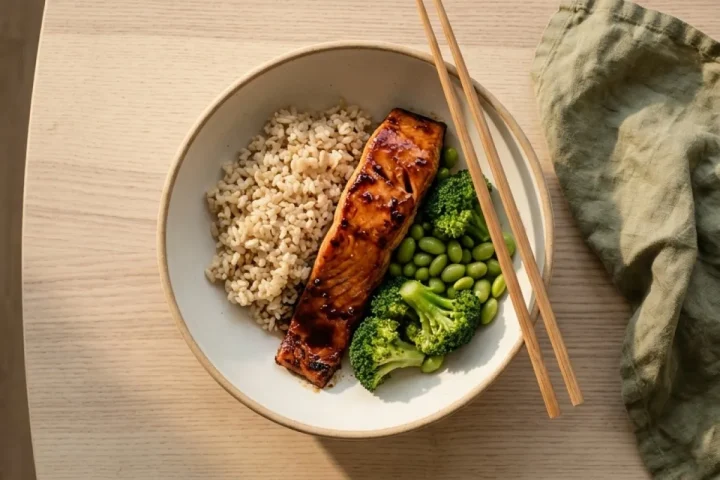
- Cooked: roasted broccoli, charred corn, blistered green beans, caramelized sweet potato.
- Raw or pickled: cucumber, shredded cabbage, radish, quick-pickled red onion, herbs.
Add one crunchy finish if you like: toasted sesame seeds, chopped peanuts, pepitas or crispy shallots. A small amount goes a long way.
4. The sauce: what you will remember
A bowl lives or dies by its sauce. You don’t need many. Six base formulas cover almost everything on this site, from tahini-lemon to peanut-lime to chimichurri, and each takes about five minutes. See our sauce formulas.
Two rules: taste and adjust the salt and acid before you serve, and keep the sauce in a separate container if the bowl will sit for more than an hour.
Putting it together
A worked example for one person:
- 1 cup cooked jasmine rice (base)
- 150 g seared chicken thigh, sliced (protein)
- Roasted broccoli and sliced cucumber (fresh part)
- 2 tablespoons sesame-ginger sauce and a pinch of sesame seeds (sauce and crunch)
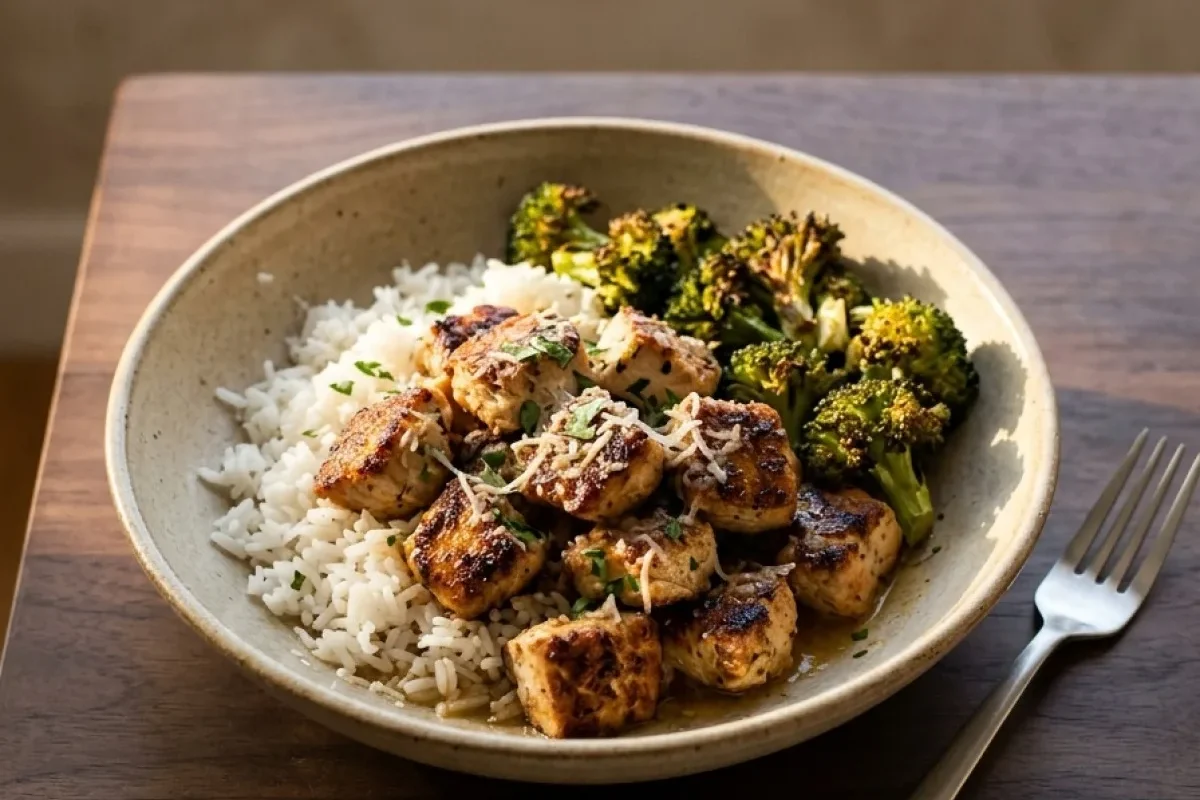
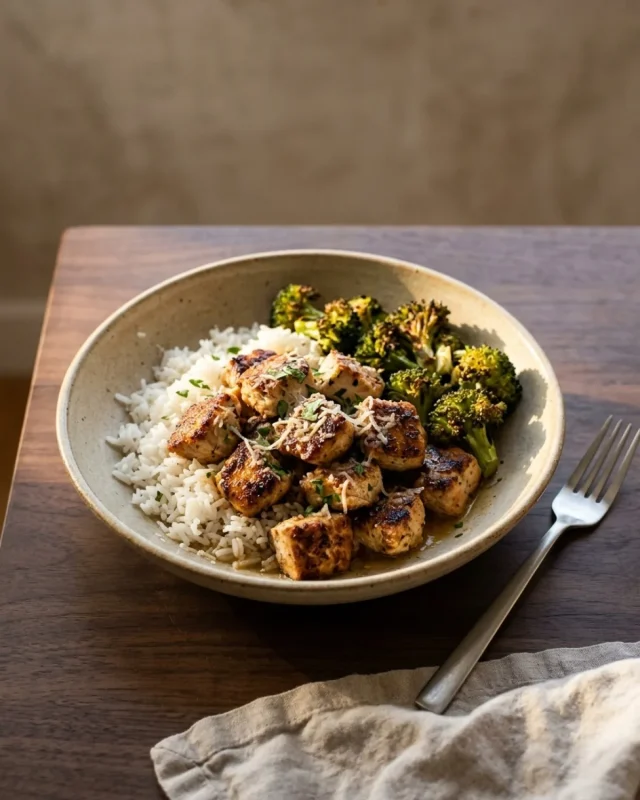
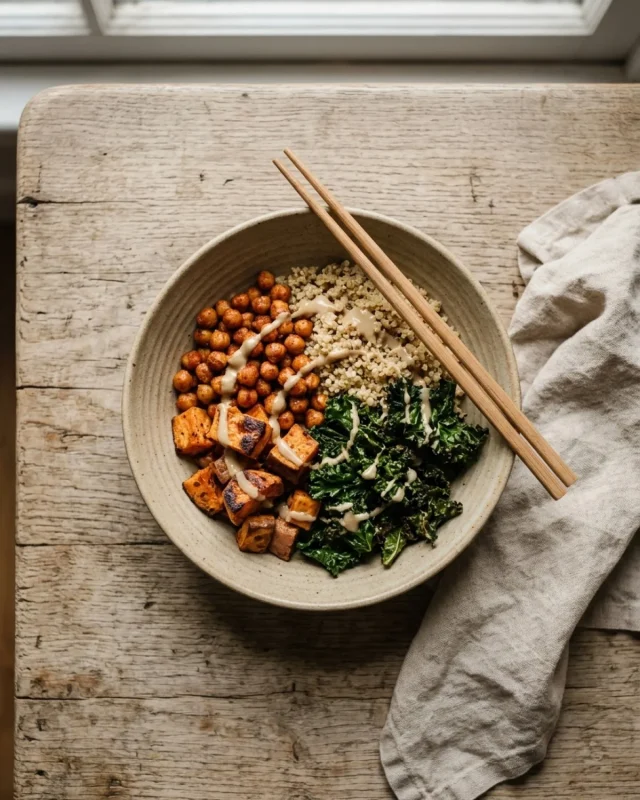
That is the whole method. Swap any one part and you have a new bowl. To see the formula in practice, try the garlic parmesan chicken rice bowl or the warm spiced chickpea and quinoa bowl.
Protein figures are approximate and based on USDA FoodData Central values for cooked foods. Exact amounts depend on the cut, brand and portion.
Comments